Showing posts with label personal development. Show all posts

Tuesday, April 13, 2021

A Brief Debrief For The Sales Engineer


How To Improve Your Sales Calls in Five Minutes


/TLDR: Our recent Professional Skills training has highlighted that most sales teams are not routinely debriefing and asking each other for feedback. Here is a simple, quick process you can use to get tips from your colleagues on how you can improve for the next sales call.


 As we’ve been delivering our Professional Skills training throughout our client base in 2021-21, we’ve taken the opportunity to informally ask a number of questions.


One question is “how often do you debrief with the FSR after a customer sales call?”

We always debrief” is the common reply.

“What do you cover in the debrief?” we respond.

“Oh, we agree on Next Steps and Account Strategy!” says the SE.

“What about discussing what happened during the call? The good, the bad and the ugly?”

            “Well, we hardly ever make time to talk about that. There’s always another call..”


We believe you are missing out on a wonderful opportunity for improvement. Just a 5-minute investment into a true call debrief can make a major difference in your overall team performance and personal productivity.


The T3-B3-N3 Process.


The process is simple. You ask the FSR (and anyone else who sat in on the call) three simple questions. Adjust appropriately for culture and title.


T3 – Top 3

What are the top three things I did in the sales call that I should repeat every time I am in that kind of situation?

B3 – Bottom 3

What are the three things I did in the sales call that I should never ever do again?

N3 – Next 3

What are three things I did not even do in the sales call that I should consider including next time?

It’s a non-threatening collection of positive reinforcement, constructive feedback and new ideas mixed in with a little “don’t do that”. Now you need to take notes, try to get specific examples (my example: “When you interrupt the customer before he finishes asking his question it shows a lack of respect and professionalism. Next time pause and count to two before you answer”) and if appropriate, put a plan in place to fix or to reinforce the behavior. Then follow-up with that person within a few weeks – that way they will give you some more feedback once they know you are listening to them.

Feedback is a gift, and together with learning more about your own solution, it’s the #1 way you have of improving. You may not always like what you hear, but it is still a gift.

Advanced T3-B3-N3

 Substitute “we” for “I” in the previous set of questions. As in: “What are the top three things we did in the sales call that we should repeat every time we are in that kind of situation?”

 Master Level T3-B3-N3

 Ask the FSR – “would you like to hear your T3-B3-N3 list?”

 Sales Engineer Manager Call To Action

 85% of Sales Engineers (to use the generic term) across the globe report that they want more feedback from their Manager. 65% of Manager’s feel that they give sufficient feedback. Get engaged, speak up and make a difference.


Summary 

After the next sales call – if you want more than “you did good” or the truly terrible “it was fine”, try the T3-B3-N3 approach and see what happens! You will be amazed, and a little scared, by the responses you receive – especially once you’ve established some trust with that individual.


Sunday, October 2, 2016

A Summer Break .. And Back To Work

After the effort of both releasing The Trusted Advisor Sales Engineer and creating some brand new SE Leadership modules - it was time for a summer break. The break was in reality just a slow down in classes and consulting operations and now it's time to get back to speed.

With that in mind, the MTS Edge October Newsletter is being sent out this week to over 27,000 SE's around the world. This month we are featuring The Sales Engineer Career Path (which is pretty self-explanatory) and The Little Grey Dot (a neat trick to help with presenting PowerPoint builds).

"Ask John" looks at how I start the day - which might give you a few ideas about time management. I'm nowhere near perfect, but believe I do a pretty good job of getting my days started on-track and on-time. Our featured book is "Oh Great One!" by John Novak. It's a light hearted, but quite compelling, story about the power of recognition. Reading the book you'll see the ghosts of previous bosses - both the good ones and bad ones.

More to come ..

Tuesday, January 6, 2015

So What Happened To The January Newsletter?

It's late! We're actually going to publish the Mastering Technical Sales Edge next Tuesday - January 13th. But there is a really good reason, and it's worth explaining and it points out the power of making a change.

December 2013 was a crazy busy month for the company, which - coupled with a death in the family - didn't allow a lot of time to enjoy the holidays with my family and celebrate Christmas. It was all too hectic and rushed. So one of my 2014 resolutions was to improve my work/life balance. Now I think I have one of the best jobs in the world, and although I travel a lot (150,000 miles in 2014), I really do get to spend a lot of time with my wife, Allison, and with two of my children. Just not before and during the Christmas of 2013.

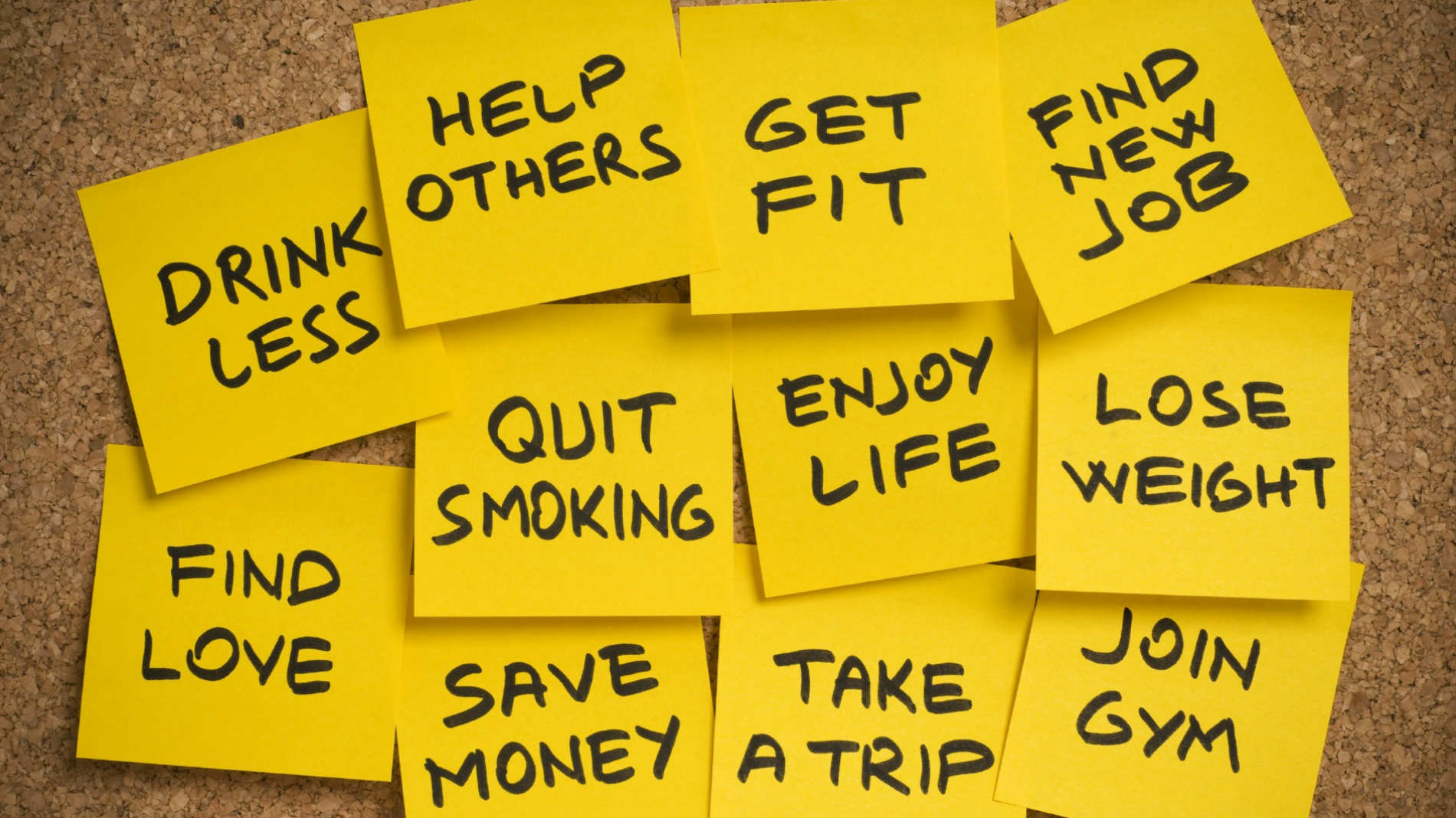
I vowed I would do better. And instead of a vague "do better" I made a series of micro-resolutions. (See Book of the Year - Small Move, Big Change for more details). One of them involved not working on certain days or when my wife was off work. Circumstances meant that I spent a lot of wonderful time with friends and family - and didn't write. Hence the late delivery. It's a good reason. The good news is that one of my 2015 micro-resolutions is that I will blog/write at least twice per month. (Instead of saying I will blog more - which means nothing.)

There is already some new content on the website. You'll find my annual list of suggested 2015 New Years Resolutions For the Sales Engineer. (Which also apply for the Year of the Sheep) I'm also going to take another look at The Technical Win which is a term I absolutely hate and think drives a wedge between sales and sales engineers.

During February I'm going to write something up about useful presales metrics and the fallacy of metrics. Books on the list over the next few months include The Power of Habit by Charles Duhigg and Wiser (Making Groups Smarter) by Prof Cass Sunstein. If there are any other books out there you'd like to recommend to me please email or leave a comment.

Thursday, December 5, 2013

The Female PreSales Engineer

I've long been a big fan of getting more women into the profession of Pre Sales Engineering. Although I feel the industry has made some progress over the past 10 years, it is absolutely not enough. The overall percentage has wavered between 10-15% and I'm not seeing much of an upwards trend.

It's important because companies are missing out on a vast potential talent pool, and (accuse me of being sexist) women just listen better and generally do a better job of asking questions and conducting discovery. I'm not even going to touch the empathy situation or the attention a female SE may receive when presenting to an all-male customer/IT group. Yet I do feel I am entitled to say that as my daughter is a presales engineer (with an Engineering Degree) and I know what she has gone through.

A few recent experiences this year have brought this to bear.

1. Wow!

For the first time ever - I had a class where there were more women than men. First time. Amazing! Thanks Christine and Stephanie!!

2. Industry Variations
 
Let's say , for math simplification, that my typical workshop has 20 SE's in it.
 
The numbers I've tracked over the years show that the number of women varies from 0 to 8. Breaking that down further. IT infrastructure/"plumbing" companies have by far the lowest percentage. The more technical/geeky the product is, the lower the percentage and diversity drops and rapidly approaches zero. I've had three classes this year with zero women - and the class represented the entire national or worldwide SE team.
 
Hardware companies are little better.
 
General software companies seem to hover around that 10-15% level.
 
Application type companies (ERP, CRM and HR) trend higher and the ratio can reach 25% or more.
 
3. Hiring and Recruiting.
 
Many SE leaders tell me that they cannot even find experienced candidates to hire. So how about a grow-your-own associate program? Or look at your technical support / customer relations team?
 
4. Global Implications
 
Much as I bemoan the stats here in the US - it is even worse in most parts of the world. Asia-Pacific-Japan-China has a long way to go. Parts of Europe are better than others. Yet there is hope -  Early this year I ran 2 workshops in India and there were a significant number of young female SE's in the class. With just a little encouragement to speak up and try new things - they stole the show and put their male colleagues to shame.
 
When I look back at my career, some of the best SE's who ever worked for me (and I like to think that I did make a point of hiring women to diversify and improve my teams) were women. No question about it - and you know who you are. Two of my best ever SE managers were women.
 
Lets make a difference and take a positive step to improve the profession. Evangelize what we do - and lets recruit the next generation of SE's in a 50/50 mix - it will make us all better.
 
What do you think?

Sunday, June 5, 2011

Making Mistakes


I just finished Alinia Tugend's Making Mistakes as the review book for June.


It was tough reading. The basic premise is that mistakes are good - as long as they are non-fatal, are found and corrected rapidly and are learning experiences. This is all dependent upon the prevailing social or corporate culture that we live in. So far , so good - although like many business books nowadays it has one central theme and just beats you over the head with it for several hundred pages.


My viewpoint on mistakes, as far as the Sales Engineering community is concerned, is that they are healthy. Einstein was once quoted as saying that if you didn't make mistakes you weren't really learning and trying. Yet as SE's - we demand perfection - perfection of ourselves, perfection of our software/hardware and perfection from the rest of the team. Not too realistic. Throw in a demanding sales manager and that's not an environment that is going to be adaptable to change.


As a manager I always tried to differentiate between a MISTAKE - such as failing to prepare adequately before a demo or missing a key business issue, with a mistake - such as a slide that didn't get quite get the point across, or pressing the wrong button on a screen. Why is this of interest to me? I'm in the business of making people change - change the way they perform Discovery, change the way they present, change the way they design PPT, change the way they structure and design demos. None of that is going to happen without a few mistakes in front of the customer - yet in the long run my customers tell me about increased win-rates, fewer demo do-overs, better POC conversion rates etc - all because someone was wiling to take a (measured) chance.


The morale of the post is try something different. Practice it, think it through, and then add it to your customer-facing repertoire. (And when it works - share it with your peers). It's what will make you a better SE.