Showing posts with label communications. Show all posts

Wednesday, May 25, 2016

Pick Up The Phone!

“So then I sent the rep an email…”
“I’m waiting for support to respond to my status update request”

Whenever I hear a phrase similar to these in one of my consulting engagements, I know I’m close to finding a problem, or at least uncovering a major symptomatic issue. Let me explain ..

After four months of travel running enablement and training workshops, May has been kinder and gentler and I have been working on a couple of “take-home” consulting opportunities. Both involve some badly broken internal sales processes at a couple of mid-sized companies. These processes were impacting both the effectiveness of presales engineers and ultimately the win-rate of sales. You know when a process is so badly broken that the injured parties readily admit that they spent more time trying to fix the blame as opposed to fix the process, which is why a third-party comes in to obtain resolution.

In both cases, email was to blame, and the people who relied upon it as their primary communications mechanism. Instance #1 involves a company with incredibly poor Sales Discovery habits and instance #2 a company where Sales Engineering spends 35% of their time bailing out Customer Support. Repeatedly, an email was
  1. Left unanswered
  2. Sent solely as a CYA (Cover Your A$$)
  3. Incomplete and poorly written
  4. Partially answered
My response in both the situations was to say “pick up the phone!”. An email is linear (in the good old days we’d call it half-duplex) as only one party can communicate at a time. An email can’t contain (much) emotion – I don’t feel there is much room for smiley-faces in business communications unless you really know the other person. A phone call allows you to get all your questions answered (you’re in sales – you know how to ask questions and get them answered!). Plus a phone call leaves no audit record other than that the call was actually made. You can say things in a call you cannot in an email.

So if you are frustrated in some internal process (or even in a customer communication) see if email is in the communication chain. If it is – ask yourself what would happen if you picked up the phone rather than send another email?

Maybe things would magically get better.

In my two engagements, the discovery rate doubled and presentation standards have improved dramatically in just three weeks for one customer, and the other customer reports that post-sales time has decreased from 35% to a still-high 22% and is trending downwards.

Pick Up The $^#@ Phone!

Tuesday, June 2, 2015

June , WTF, And Other SE Things

The monthly website refresh has happened and the June newsletter has been distributed. The main topic this month is the "WTF" Presentation - or Wonderful Technical Features pitch that almost every SE has to give multiple times every quarter.
I decided to write this (and have a little fun with my inter-dimensional reverse dynamic network backup and data regeneration feature) because I have just seen a ton of these truly terrible product-oriented decks over the past 2-3 months. There seems to be a disconnect between Product Management/Marketing and the Sales/Pre-Sales team over what is needed. As an SE, sometimes you have to talk techie and satisfy the IT gurus in the room - that's part of the job - but doing it with a boring, unstructured and almost illegible deck isn't the way to go.
 
And many of the "three-hour-tour" demos I have seen are not much better! The article lays out three quick and very simple ways to change the WTF so that it is a little more fun and memorable for everyone. If your PM group generates WTF's pass them the article - and if they don't - be thankful!!
 
We also look at harnessing The Power Of Three's (note the "three" in the WTF article) as a way to help your customer actually remember what you are showing them. If they don't remember it, they won't understand it and if they don't understand it they most certainly won't buy it.
 
We also make a quick pitch for the MTS Video Series - it's just under 2 hours of video that covers six major SE concepts and is really "The Best Of John".
 
Enjoy!

Tuesday, January 6, 2015

So What Happened To The January Newsletter?

It's late! We're actually going to publish the Mastering Technical Sales Edge next Tuesday - January 13th. But there is a really good reason, and it's worth explaining and it points out the power of making a change.

December 2013 was a crazy busy month for the company, which - coupled with a death in the family - didn't allow a lot of time to enjoy the holidays with my family and celebrate Christmas. It was all too hectic and rushed. So one of my 2014 resolutions was to improve my work/life balance. Now I think I have one of the best jobs in the world, and although I travel a lot (150,000 miles in 2014), I really do get to spend a lot of time with my wife, Allison, and with two of my children. Just not before and during the Christmas of 2013.

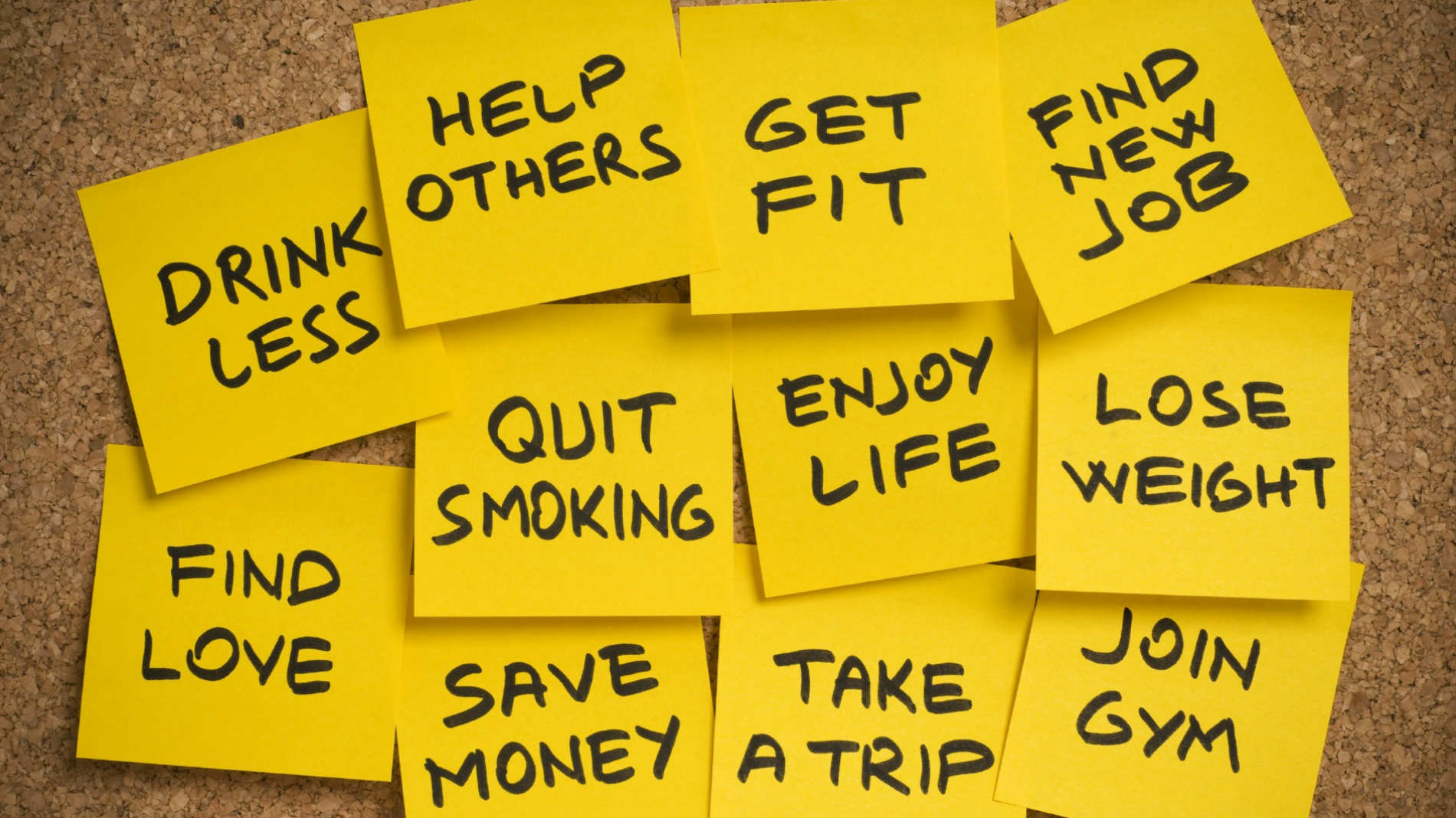
I vowed I would do better. And instead of a vague "do better" I made a series of micro-resolutions. (See Book of the Year - Small Move, Big Change for more details). One of them involved not working on certain days or when my wife was off work. Circumstances meant that I spent a lot of wonderful time with friends and family - and didn't write. Hence the late delivery. It's a good reason. The good news is that one of my 2015 micro-resolutions is that I will blog/write at least twice per month. (Instead of saying I will blog more - which means nothing.)

There is already some new content on the website. You'll find my annual list of suggested 2015 New Years Resolutions For the Sales Engineer. (Which also apply for the Year of the Sheep) I'm also going to take another look at The Technical Win which is a term I absolutely hate and think drives a wedge between sales and sales engineers.

During February I'm going to write something up about useful presales metrics and the fallacy of metrics. Books on the list over the next few months include The Power of Habit by Charles Duhigg and Wiser (Making Groups Smarter) by Prof Cass Sunstein. If there are any other books out there you'd like to recommend to me please email or leave a comment.

Sunday, November 2, 2014

The Challenger SE Part 2 - Don't Call The Baby Ugly!


The Challenger Sale has really had an impressive impact on the high technology salesforce. More than 50% of my clients have either formally or informally adopted it as an overlay on top of their current sales process. Yet looking back at implementation over the past two years I’ve noticed one persistent problem in both the sales and pre-sales utilization of the “Challenge” – and that is what I now label as “Calling The Baby Ugly”

The Ugly Baby

You would never, ever, tell parents that their baby is ugly. You always look for something positive to say and provide some form of complement. Yet sales and presales alike, emboldened by the Challenger Sale, quickly launch into a description of why a customer’s processes/personnel/strategy/implementation is wrong (i.e. ugly) and then offer to fix this ugliness. Customers have invested their time, money and resources into their current situation and take pride in their work – so a full-frontal attack on the status quo rarely works.

 Customer Reaction – The Three “D’s”

 Sales takes the Challenger Sale and tries to disrupt the customer and their thought process, which can be a very unpleasant experience. You more directly you challenge, the more you need to be 100% accurate and on-point. Customers can react negatively in one of three ways:


1.    Defend – they defend the status quo and why things run the way they do. This is an almost guaranteed way to ensure that “Do Nothing Inc.” gets the deal. Nothing will happen and the harder you try to push your Challenge the stronger the defense will become.

2.    Deny – they will deny that there is a problem. Remember the rule that “it is not a problem until the customer says it is a problem”. Denial and defending tend to go hand in hand.

3.    Destroy – they will destroy your ideas and also destroy your client relationship. There is no upside to following this path.

In all of these cases you need to make a decision how to react when you start to get some pushback or objections – in almost all cases you need to proceed with caution.

Asking Better Questions – The Three Customer “C’s”

 
Companies invest a lot of time and money teaching their salesforce how to ask better questions – the problem is that the customers don’t play along.


1.    Customers rarely follow a script and allow you to follow a pre-determined line of questioning, no matter how well you prepare.

2.    Customers don’t always know what they want. So sometimes that voyage of self-discovery just gets them lost, dazed and confused.

3.    Customers don’t always tell you everything you need to know and you cannot get the whole story. Sometimes that is accidental and sometimes deliberate.


So What Should A Sales Engineer Do?


In Part 1 of this series I explained how customers believe that the SE offers more value than anyone else from the vendor organization and detailed some ways to capitalize on that. The key is to approach the customer with some humility and deference. (Sometimes you have to approach the challenge head-on and directly – possibly with the classic Wall Street Managing Director or the Executive who says you have two minutes – but let’s say for now that is a corner case and not the norm). How do you take this approach?


Step 1 – Will The Customer Listen To Me?
 

Many SE’s use that Trusted Advisor term, which in this case means will the customer listen to, and accept, my advice? We’ve all been in the position when we have given someone really good advice and they have ignored us. If you have that T/A relationship with the customer, life is easier. If you don’t, you are explicitly going to have to ask permission. As an extreme, contrast the Global Account SE who lives and breathes one large client, compared to the inside SE who may deal with 8 clients a day!
 

Step 2 – Asking Permission
 

Customers accept negative news much better when presented in a positive manner. That means keeping the results and outcomes in mind, rather than focusing entirely on the current problems. My preferred approach is to preface the Challenge with a softening or even self-deprecating statement. Set-up examples might be:


“Can I share something with you about how Customer “X” dealt with a similar situation? I’m sure it’s not an exact match as I still have a lot to learn about your company, but I think you’ll find it worthwhile”
“Can I ask you something off the record?”
“I understand the company has a lot of time and effort vested in this current process and its serving you well. Would you be interested in learning about some ideas..”
“How about we take a break, go grab some tea/coffee, as I’d like to run a few ideas by you about alternative ways to..”


Step 3 – Make The Challenge


The challenge needs to be made from a twin basis of success and facts. That means speaking about how other customers have overcome similar obstacles and the results they achieved rather than diving down into the details of all the current issues. You also need to be clued into the non-verbal signals from the customer. Often the best approach is to get them out of a “sales environment” by moving to the cafeteria, or at least closing down the laptop.

The more people you have in the room, especially once you get past five, the lower the probability of Challenge success. That may sound counter-intuitive as you’d think your spark would have a greater chance of catching fire, yet mass psychology takes over and audiences conform to the norm. So the Challenge works better in small groups and one-to-one. Note that Rep + SE versus a single non-executive customer also isn’t a good situation as that also leads to defense.

Step 4 – Support The Challenge

Once the customer opens up to the Challenge, provide specific examples (evidence and impact) and back that up with numbers (usually time, money or headcount). Remember you are trying to spark curiosity and get a “tell me more” response and not trying to close the deal or stun the client with your intelligence!


Summary


The introduction of the Challenger Sale presents a great opportunity for the SE team to reassert themselves back into the customer relationship and break away from being a technical resource. There is a crisis in sales right now as reps struggle to cope with the better educated buyer, to ask more insightful questions and to truly provide value , so ….


“Never let a good crisis go to waste..”

-      Rahm Emanuel, Mayor of Chicago

Thursday, August 29, 2013

Take A Break!

At least here in the US, the week before the Labor Day holiday (Monday September 2nd) is usually a quiet week for me. It's the last week of summer, the last week of freedom for children before they go back to school (so many customers take the week off) and it's also my Wedding Anniversary - all good reasons not to travel.

So I use the time to catch up on paperwork, make some calls, and most importantly of all - do some writing. As I am now working on both the Third Edition of Mastering Technical Sales and an add-on book with a working title of "The Trusted Advisor Sales Engineer" I have about 60,000 words to write or revise before the end of the year.

That means I need to focus and concentrate on a single task. That means I turn off email for 3-4 hour periods. And that means I get almost no distractions and get a lot done without the annoying "ding" or the temptation to check my inbox. I know if someone really wants to reach me they'll call me.

Try it. Take baby steps. Next time you really need to focus on a task ..

  1. Turn off all the visual and sound notifications that you have new email. Don't forget to silence the phone and tablet too.
  2. Then - go into your email settings, and set the synchronization time for email to 60 minutes.
  3. Finally - shut down your email for a couple of hours.

If you are working on your #1 most important, critical task - there is no reason why you shouldn't treat it the same way as being in front of a customer. No interruptions!

Give it a try ..

For other email tips go read "Are You Really Paid To Read 200 Emails/Day?"

Wednesday, May 16, 2012

Pick Up The Phone!!


“So then I sent the rep an email…”

“I’m waiting for support to respond to my status update request”

Whenever I hear a phrase similar to these in one of my consulting engagements, I know I’m close to finding a problem, or at least uncovering a major symptomatic issue. Let me explain ..

After four months of travel in 2012 running enablement and training workshops, May has been kinder and gentler and I have been working on a couple of “take-home” consulting opportunities. Both involve some badly broken internal processes at a couple of mid-sized companies. These processes were affecting both the effectiveness of presales and ultimately the win-rate of sales. You know when a process is so badly broken that the injured parties readily admit that they spent more time trying to fix the blame as opposed to fix the process, which is why a third-party comes in to obtain resolution!
In both cases, email was to blame, and the people who relied upon it as their primary communications mechanism. (I am going to write a longer article about this topic but I need to get it off my chest now). Instance #1 involves a company with incredibly poor Discovery habits and instance #2 a company where presales spends 35% of their time bailing out customer support. Repeatedly, an email was
A)     left unanswered
B)      sent solely as a CYA (Cover Your A$$)
C)      incomplete and poorly written
D)     partially answered
My response in both the situations was to say “pick up the phone!”.  An email is linear (in the good old days we’d call it half-duplex) as only one party can communicate at a time. An email can’t contain (much) emotion – I don’t feel there is much room for smiley-faces in business communications unless you really know the other person. A phone call allows you to get all your questions answered (you’re in presales – you know how to ask questions and get them answered!). Plus a phone call leaves no audit record other than that the call was actually made. So you can say things in a call you cannot put in an email.
So if you are frustrated in some internal process (or even in a customer communication) see if email is in the communication chain. If it is – ask yourself what would happen if you picked up the phone rather than send another email?
Maybe things would magically get better.
In my two engagements, the discovery rate doubled and presentation standards have improved dramatically in just three weeks for one customer, and the other customer reports that post-sales time has decreased from 35% to a still-high 22% and is trending downwards.